
MATERIAL HANDLING EQUIPMENT & FORKLIFT TRUCK THOROUGH EXAMINATION AND INSPECTIONS
Material Handling Equipment (MHE) & Forklift Thorough Examination and Inspections
Material Handling Equipment (MHE) typically includes all equipment used to move, lift, stack or control loads within a workplace. We provide LOLER 1998 and PUWER 1998 compliance, thorough examination and inspection services on all types of material handling equipment on including, but not limited to; Forklift, Reach Truck, Counterbalance forklift, Articulated forklift, Multi-directional forklift, Side loader forklift, Container handler forklift, Truck mounted forklift, Rough terrain forklift, Very narrow aisle (VNA) forklift, Order picker, Powered pallet truck, Powered pedestrian ride-on truck, Powered stacker truck, Manual stacker, Telescopic handler.
If your business operates forklift trucks (often referred to in HSE guidance as lift trucks), you have legal duties under UK health and safety legislation to ensure equipment is safe, maintained and subject to appropriate inspection and thorough examination. Explore our HSE compliance services to strengthen your legal understanding and create a healthier workplace.
Plant and Safety are national industry leaders, in providing thorough examination and inspection services at a national level, our Forklift truck thorough examination services are accredited by British Insurance Brokers Association (BIBA), UK Material Handling Association (UKMHA), and Safety Assessment Federation (SAFed).
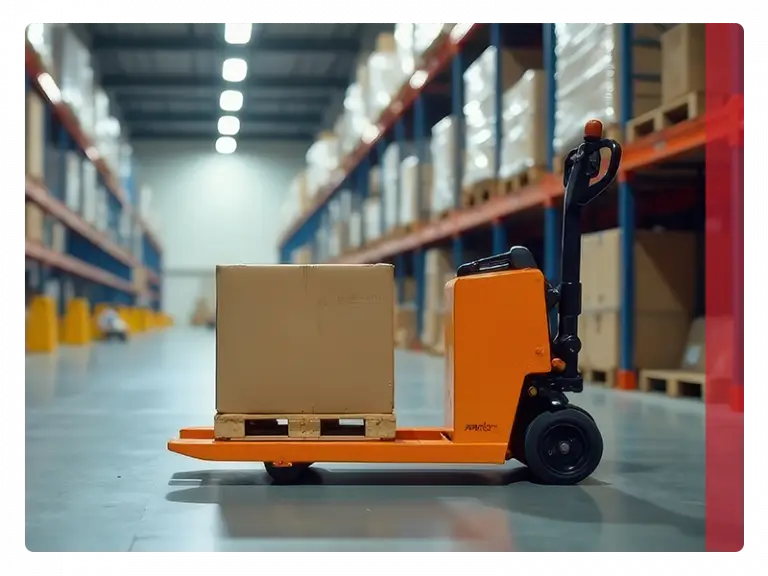
What is Material Handling Equipment (MHE)?
Material Handling Equipment covers a broad category of workplace equipment used to, Lift and lower loads, Transport materials, Stack and store goods and Control or position products.
Common examples include:
› Forklift truck
› Reach truck
› Counterbalance forklift truck
› Articulated forklift truck
› Multi-directional forklift truck
› Side loader forklift truck
› Container handler forklift truck
› Truck mounted forklift truck
› Rough terrain forklift truck
› Very narrow aisle forklift truck
› Order picker
› Powered pallet truck truck
› Powered pedestrian ride-on truck
› Powered stacker truck
› Manual stacker
› Telescopic handler
Have a Question About Forklift Truck LOLER & PUWER Thorough Examinations and Inspections?
Our team are happy to help, just send us a message.
Forklift LOLER and PUWER Thorough Examinations and Inspections
Forklift Truck LOLER and PUWER Thorough Examinations and Inspections, what are the legal requirements?
Forklift Truck Requirements LOLER 1998
The Lifting Operations and Lifting Equipment Regulations 1998 (often abbreviated to LOLER) place duties on people and companies who own, operate or have control over lifting equipment.
This includes all businesses and organisations whose employees use lifting equipment, whether owned by them or not. In most cases, lifting equipment is also work equipment so the Provision and Use of Work Equipment Regulations (PUWER) will also apply (including inspection and maintenance requirements). All lifting operations involving lifting equipment must be properly planned by a competent person, appropriately supervised and carried out in a safe manner.
LOLER also requires that all equipment used for lifting is fit for purpose, appropriate for the task, suitably marked and subject to statutory periodic ‘thorough examination’. This can also be referred to as a LOLER Inspection.
Forklift Truck Requirements PUWER 1998
The Provision and Use of Work Equipment Regulations 1998 (often abbreviated to PUWER) place duties on people and companies who own, operate or have control over Work Equipment.
This includes all businesses and organisations whose employees use Work Equipment, whether owned by them or not. In most cases, Work Equipment such as Overhead Cranes, Forklift Trucks, and Access Equipment is also classed as Lifting Equipment in accordance with LOLER 1998.
PUWER 1998 requires that all Work Equipment is Suitable, Maintained, Inspected at suitable intervals, and suitable Training and Information is provided on the safe use and operation of the equipment. PUWER 1998 specifically requires that all Work Equipment receives a routine Thorough Examination and Inspection by a competent body.
What is the difference between Forklift Truck Servicing and Forklift Truck Thorough Examinations
Servicing: Routine, scheduled maintenance performed by technicians to prevent breakdowns and prolong truck life. It usually covers oil changes, filters, lubrication, and adjustments. All work is typically completed in accordance with the OEM servicing requirements as defined in the OEM operator/ service manual.
Thorough Examination: A Thorough Examination cannot be replaced by a service, and a service is not a legal substitute for the examination.
Thorough Examinations and Inspections are a statutory requirement under LOLER 1998 and PUWER 1998 Regulations, and should be completed by a competent person who is independent and impartial from the service provider.
Servicing and Thorough Examinations are both required for Forklift Trucks and are recommended by the HSE as being provided by separate providers to demonstrate independence and impartiality for Thorough Examinations in accordance with LOLER 1998 and PUWER 1998.
Forklift LOLER and PUWER Thorough Examinations and Inspections
Forklift LOLER Thorough Examination and Inspections Intervals
In accordance with the Lifting Operations and Lifting Equipment Regulations (LOLER 1998), a competent person should carry out a LOLER Thorough Examination and Inspection of Lifting Equipment and Accessories every:
› 6 Months for Lifting Accessories/ Attachments
› 6 Months for Lifting Equipment and Accessories/ Attachments associated with lifting people
› 12 Months for All Other Lifting Equipment
Additional Thorough Examination and Inspections after exceptional circumstances such as:
› Collision damage
› Overload incidents
› Structural modification
› Extended periods out of use
Thorough Examination and Inspection frequency should reflect operational risk, environment and intensity of use.
In accordance with the British Industrial Truck Association Guidance Note 28 (GN28), the Thorough Examination frequencies for Forklift Trucks should be as follows:
› 12 month interval between safety inspections:
Any truck working up to 40 hours per week including attachments permanently fitted to the truck. This includes integrated attachments and interchangeable equipment which is left permanently mounted to the truck.
› 6 month maximum interval between safety inspections:
Any truck working between 40 and 80 hours per week, Any truck used for elevating persons, no matter how infrequently, Any work platform used for lifting persons, no matter how infrequently
› 4 month maximum interval between safety inspections:
Any truck working in excess of 80 hours per week, Any truck working in arduous environments such as; Marine environments, Corrosive chemical environments, e.g. lorry mounted trucks where indicated by truck condition, Metal Manufacturing or processing, Cement/aggregate processing or where abrasive particulates are present, Brine processes, Cold stores, e.g. below -10°C.
› Attachments and Accessories
If not permanently fitted to the truck the interval between Thorough Examinations for removeable attachments, interchangeable equipment, fork extensions, lifting accessories, etc. shall not exceed 6 months. The interval for attachments and accessories applies to all such items not permanently fitted to the truck, even if they are mounted on a truck subject to a longer interval at the time of examination.
TRUSTED EXPERTS
Accreditations and Memberships







Let’s Talk About Your Equipment
Speak to one of our inspection specialists about your compliance requirements.
Not sure what inspection you need?
View All Inspection Services
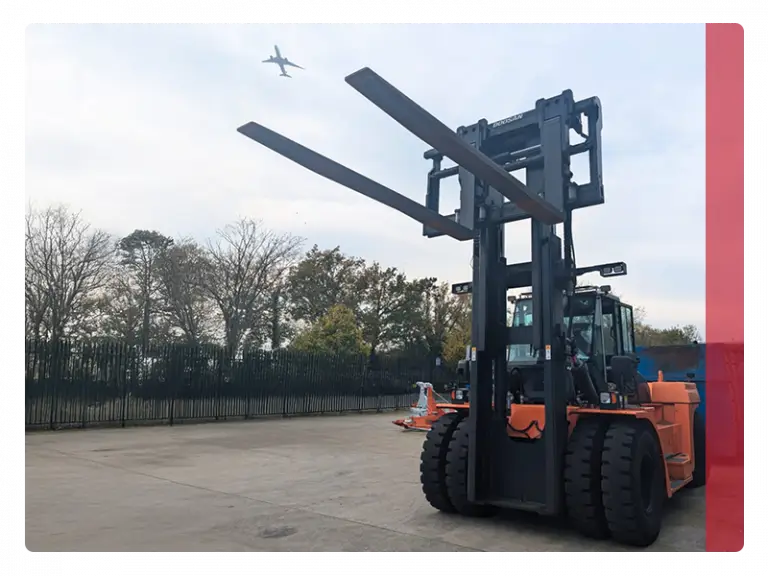
Why Forklift Truck Thorough Examination and Inspections are Critical
Forklift trucks are one of the most common causes of serious workplace transport incidents in warehouses and industrial environments.
Failure to properly inspect and examine equipment can result in, Load drops, Vehicle overturns, Crushing injuries, Structural failure of lifting components and Enforcement action by the HSE. Equipment owners and duty holders must comply with the requirements of LOLER 1998 and PUWER 1998 Regulations.
Regular independent inspection demonstrates compliance, supports safe operations and protects employees and site visitors.
Forklift Inspection failure: case study
For real‑world examples of enforcement action and the consequences of inadequate inspection, see our HSE Report: Forklift Inspection Failure.
MHE AND FORKLIFT TRUCK THOROUGH EXAMINATION AND INSPECTION
Why Choose Us for Forklift Truck and Material Handling Equipment Thorough Examinations and Inspections
Qualified Competent Persons (PUWER Compliant)
Our engineers meet the Competent Person criteria set out in LOLER 1998 and PUWER 1998
National Coverage & Fast Scheduling
Our dedicated national engineering team, and our centralised planning team are available to cover all Material Handling Equipment types on all sites across the UK.
Compliance with LOLER 1998 and PUWER 1998
Demonstrate compliance with Lifting Operations and Lifting Equipment Regulations (LOLER 1998) and Provision and Use of Work Equipment Regulations (PUWER 1998)
Fully Independent and Impartial
It is not advisable for the same person who performs routine maintenance to carry out the thorough examination, as they are then responsible for assessing their own work. (HSE Guidance)
Have a Question About Compliance?
Our team are happy to help, just send us a message.
LATEST NEWS AND UPDATES FOR FORKLIFTS AND OTHER MATERIAL HANDLING EQUIPMENT
Material Handling Equipment - News and Insights
Company News
December 11, 2025
CONTACT US FOR A FREE QUOTE
Book a Material Handling Equipment Inspection and testing now
*We may contact you occasionally with exclusive offers, promotional discounts, and company updates that may be of interest to you. By ticking the box above, you consent to Plant and Safety LTD storing and processing your personal data. To learn more about how to unsubscribe and how we protect and respect your privacy, please see our updated Privacy Notice.
How can we help?
To learn more or if you have any questions, please feel free to call or email us. You can also request a call back using our online form.
T: 0330 113 7920
E: sales@plantandsafety.co.uk
Useful Links