
Home » Company News » Industrial Door PUWER Inspections & Thorough Examinations Guide
Industrial doors are common across all UK’s industries to provide access for vehicles and goods to industrial buildings and warehouses. Industrial doors are classed as work equipment in accordance with the Provision and Use of Work Equipment Regulations (PUWER 1998), therefore they must be thoroughly examined and inspected by a competent person at regular intervals.
A common question from duty holders is: how often do industrial doors actually need to be examined, so lets look at the guidance.
Yes. Industrial doors fall under PUWER because they are work equipment used in the workplace. This means employers and those responsible for premises must ensure the doors are:
› Suitable for its intended use
› Safe for use, maintained in a safe condition, and inspected where necessary
› Used only by trained and competent persons
Inspections are particularly important where safety depends on installation conditions or where deterioration could lead to dangerous situations both of which apply to powered and manual industrial doors with moving parts.
SAFETY REGULATIONS
Unlike LOLER, PUWER does not set a fixed legal inspection interval.
Although PUWER does not specify a fixed interval, HSE guidance states inspections should be carried out at suitable intervals based on use, environment, and risk of deterioration. For industrial doors, this typically results in an annual inspection, with more frequent checks where risk is higher.
Recommended Frequency for Industrial Door Inspection and Thorough Examination
Our recommendation for industrial door thorough examinations is therefore as follows: Inspection and Thorough Examination every 12 months at minimum for all industrial doors.
What Is Included in an Industrial Door Inspection and Thorough Examination?
A PUWER inspection ensures that your industrial doors remain safe, compliant, and reliable. During a thorough examination, a competent person checks that the door:
› Operates safely
› Has effective safety devices and guards
› Shows no signs of excessive wear or damage
› Is properly maintained
Keeping inspection records is also essential, and any defects must be reported and addressed to maintain compliance.
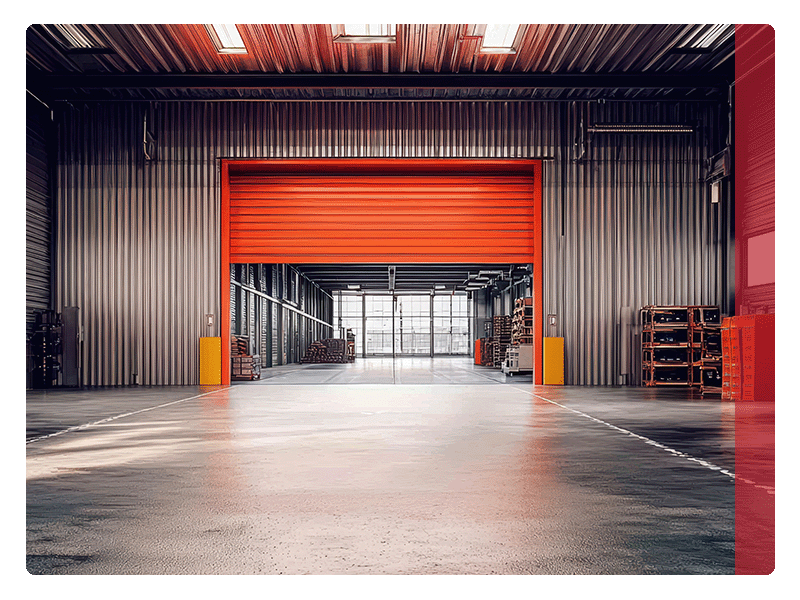
Roller shutter doors are one of the most common types of industrial doors and require regular inspection and thorough examination under PUWER 1998 to ensure safe operation.
All workplace industrial doors fall within scope, including:
› Bi-Folding Doors
› Fire Shutter Doors
› Folding Shutter Doors
› High Speed Doors
› Roller Shutter Doors
› Sectional Overhead Doors
› Sliding Doors
If the door is used as part of daily operations, it should be included in your PUWER inspection schedule.
Information on this page is based on the Provision and Use of Work Equipment Regulations 1998 (PUWER) and guidance published by the Health and Safety Executive relating to the inspection and maintenance of workplace equipment. Inspection scope and frequency should be determined by a competent person, taking into account usage, environment, and risk of deterioration.
Related Compliance Topics
for Industrial Doors
MORE INFORMATION ON INDUSTRIAL DOORS
Ensure your industrial doors and roller shutters remain safe, compliant, and fully operational. Our competent engineers carry out professional PUWER inspections and thorough examinations tailored to your site’s needs.
Call us now on 0330 113 7920 or contact us online to schedule your industrial door inspection and thorough examination.
How can we help?
To learn more or if you have any questions, please feel free to call or email us. You can also request a call back using our online form.
T: 0330 113 7920
E: sales@plantandsafety.co.uk
Useful Links